
Baja
California
Where the Last Great Whales Are Born, and the Sea of Cortez Calls Our Children Home
PRESIDENTS' WEEK 2028 · GRANDMOTHERS, MOTHERS & CHILDREN · AGES 7–13
The Journey
There are places on this planet so rare, so protected, so deliberately shielded from the outside world that most people will never stand in them. Laguna San Ignacio is one of those places.
Tucked into the remote Baja California peninsula within the El Vizcaíno Biosphere Reserve — a UNESCO World Heritage Site encompassing 6.2 million acres of protected wilderness — this lagoon remains one of the last truly undeveloped gray whale breeding grounds on Earth. Access is tightly regulated. Development is nonexistent by design. And every February, during Presidents' Week, one of the peak birthing weeks of the entire year, this remote stretch of lagoon becomes the nursery of the sea: a warm, sheltered haven where California gray whale mothers give birth, nurse their calves, and prepare the next generation for the long migration north.
You will be there.
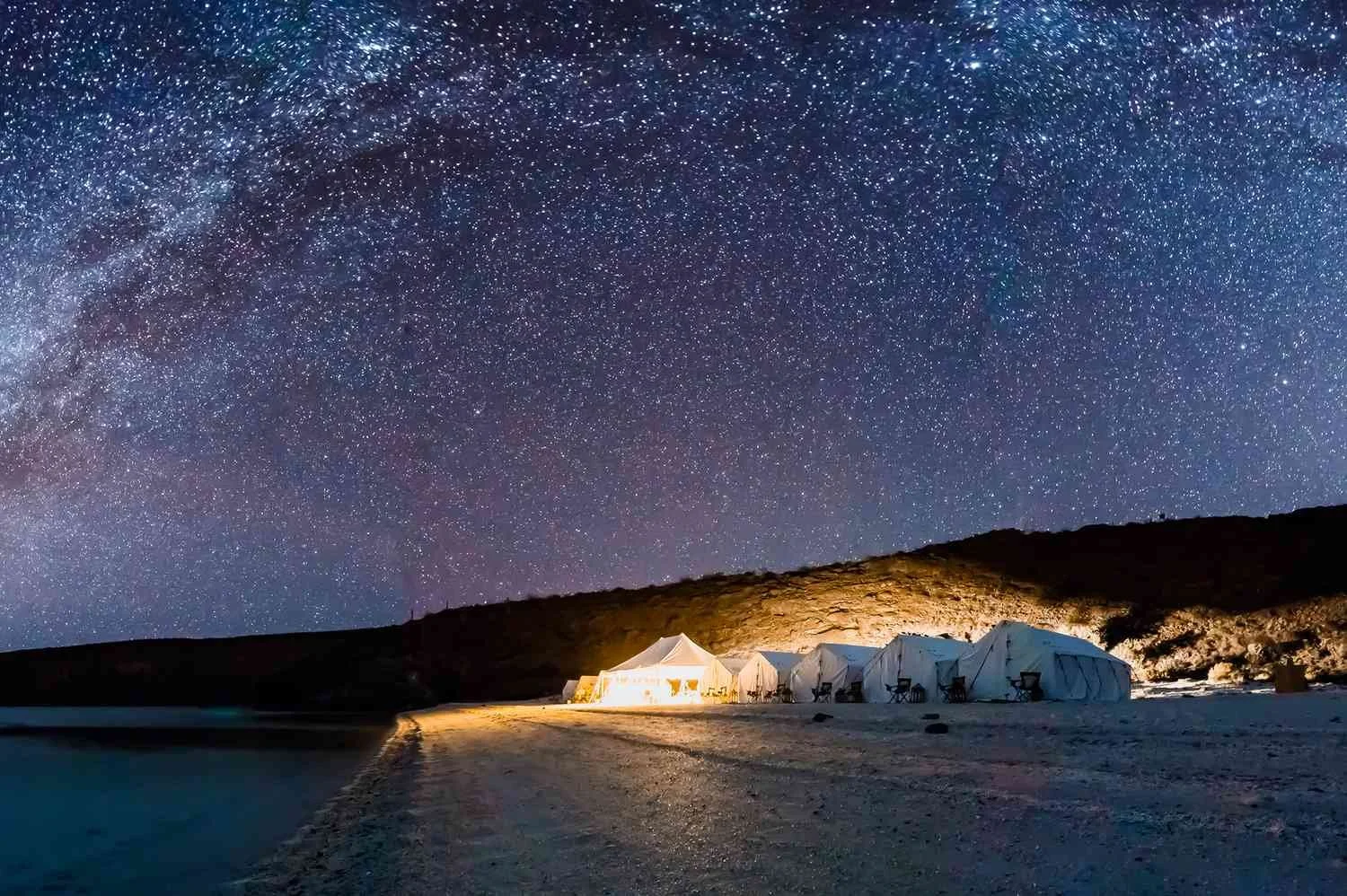
This is not a whale-watching excursion. This is a rare, frontline immersion into one of the most extraordinary wildlife phenomena on the planet and one of the most heavily regulated ecosystems in North America. Our cohort of mothers and children will set up a leave-no-trace glamping encampment directly on the beachside shores of the lagoon, where the only lights at night are billions of stars overhead, and the only sound at dawn is the exhalation of mothers and calves moving through the glassy water below.
"What does it mean to protect something magnificent? It means you limit access to it. It means you say: only a few may come here, and only with reverence. We have earned that access — and we will not take it lightly."
From there, we cross to the eastern edge of Baja — where the Pacific gives way to the Sea of Cortez, Jacques Cousteau's famed "Aquarium of the World" — and make our way to Isla Espíritu Santo, an uninhabited UNESCO island rising from turquoise water in the middle of the sea. Here, we kayak alongside whale sharks, snorkel with sea lions, and watch children discover what it means to move through a living, breathing ocean.
This is not an ordinary adventure. This is the trip their hearts will return to for the rest of their lives.
PART 1 · DAYS 1–3
The Nursery of the Sea
Laguna San Ignacio
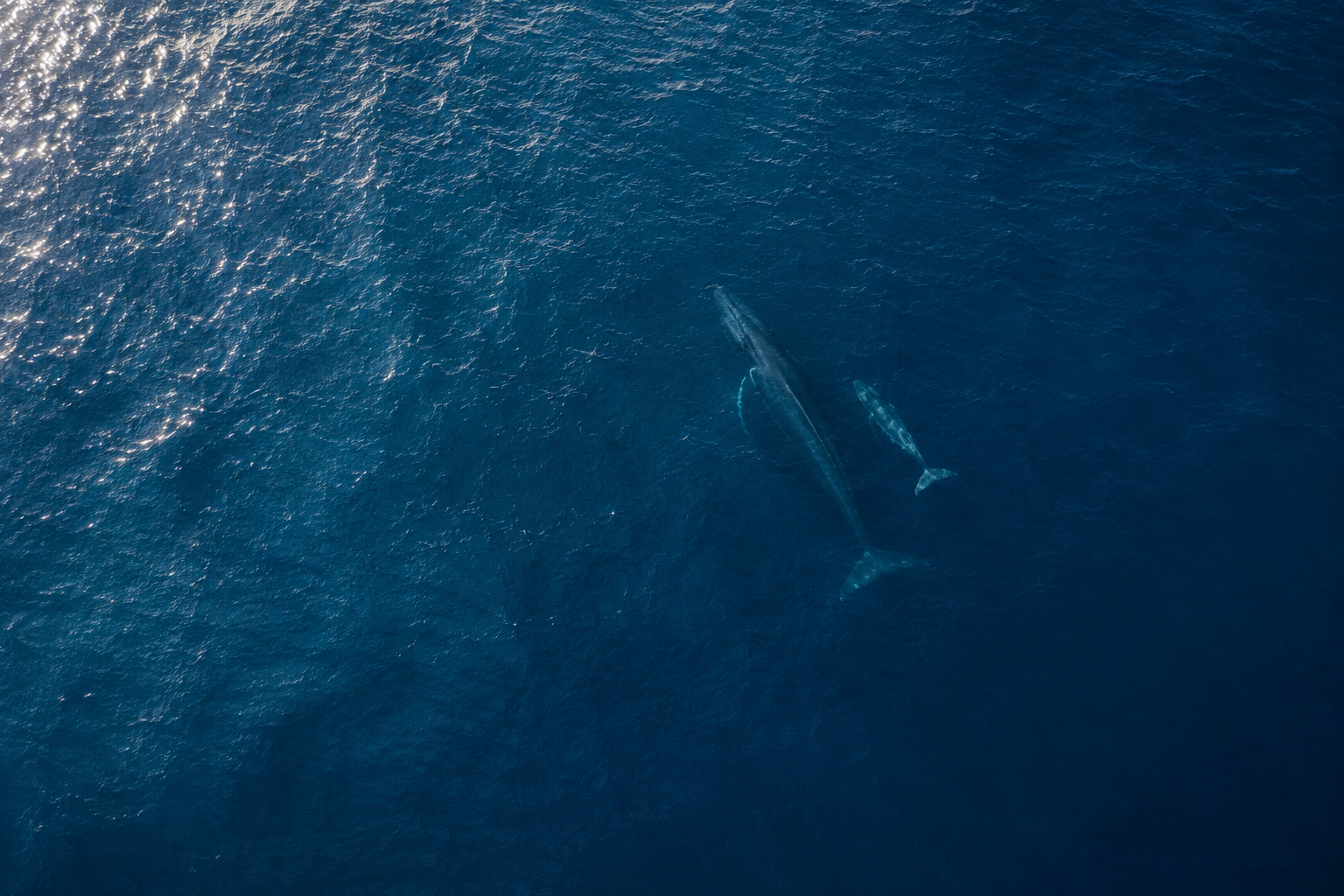
A gray whale mother and her newborn calf · Laguna San Ignacio
The Journey Begins at Home
Before our feet ever touch the lagoon, the journey begins in our own neighborhoods. In the weeks leading up to departure, children step into the role of Ocean Detectives; citizen scientists on a mission to understand the water that connects them, from their backyard creek to the Pacific itself.
Through an AtlasDaughters Ocean Challenge, children will map the nearest body of water to their home and trace where it flows; observe and document one local species that depends on that water to survive; research what threatens it; and design one concrete action their family can take to protect it. They bring these findings to Baja not as homework, but as evidence — proof that the natural world worth protecting begins outside their front door. In the final week before departure, families receive a gray whale field journal filled with migration maps, species profiles, and space to record what they witness, feel, and vow to protect.
Arrival at the Edge of the World
We make our way by small expedition vehicles deep into the Vizcaíno Desert — one of the most remote, biologically rich landscapes in all of Mexico. As the road narrows and the last traces of modernity fall away, the lagoon appears: a vast, silver mirror stretching toward the horizon, its surface interrupted by the slow, rhythmic breath of whales. We make camp on the shore — a thoughtfully designed, low-impact glamping site where no hotels, no restaurants, and no infrastructure exist by design. What there is, instead, is complete, unmediated presence with one of the most extraordinary ecosystems on Earth.
Into the Lagoon
Presidents' Week is a deliberate, precisely chosen window — one of the peak weeks of gray whale birthing and nursing in the entire year. The lagoon holds hundreds of whales: enormous, ancient mothers who have navigated 10,000 mile round-trip excursions of open Pacific to bring their calves into this one safe place. And remarkably they are curious about us.
In small, permitted pangas, our group moves quietly out onto the lagoon. No engines at speed. No crowds. Just the soft creak of a wooden boat and water parting as a gray whale surfaces nearby. Close enough to feel a calf's breath, the calves approach us, enormous and gentle, their barnacled skin rough under small fingers, their dark eyes unblinking and impossibly wise.
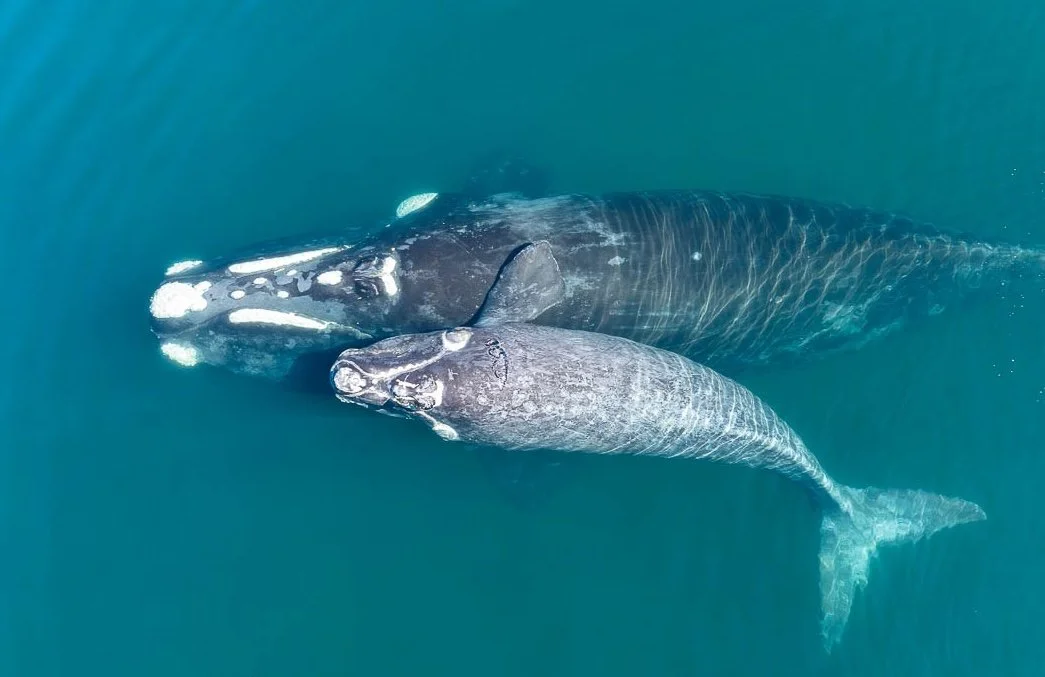
"A gray whale weighs as much as forty elephants. And yet she surfaced alongside our tiny boat and held still while my daughter touched her back. I will never recover from that moment. I don't want to."
Women Who Guard the Wild
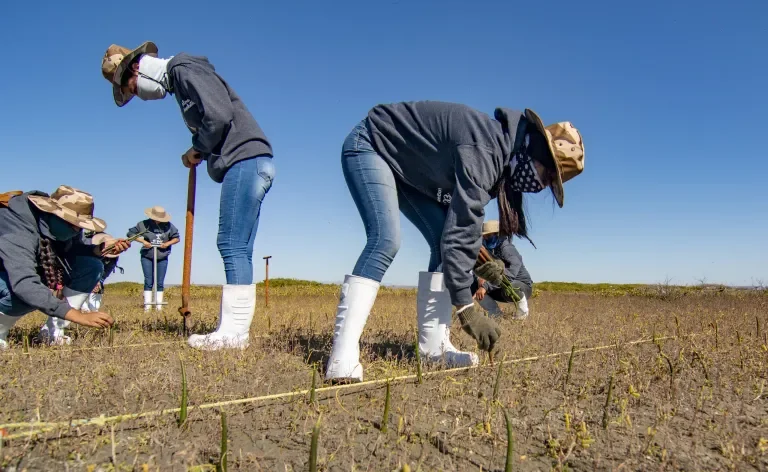
We will spend meaningful time with the Mujeres de El Dátil, an extraordinary collective of local women who have become the primary protectors of this lagoon's mangrove ecosystem, planting over 50,000 mangrove trees across 25 acres of restored coastal forest. Our children work alongside them — planting seedlings with their own hands, learning to read the tide lines, understanding viscerally what it means when we say: women are the architects of ecological survival.
Nights Under an Infinite Sky
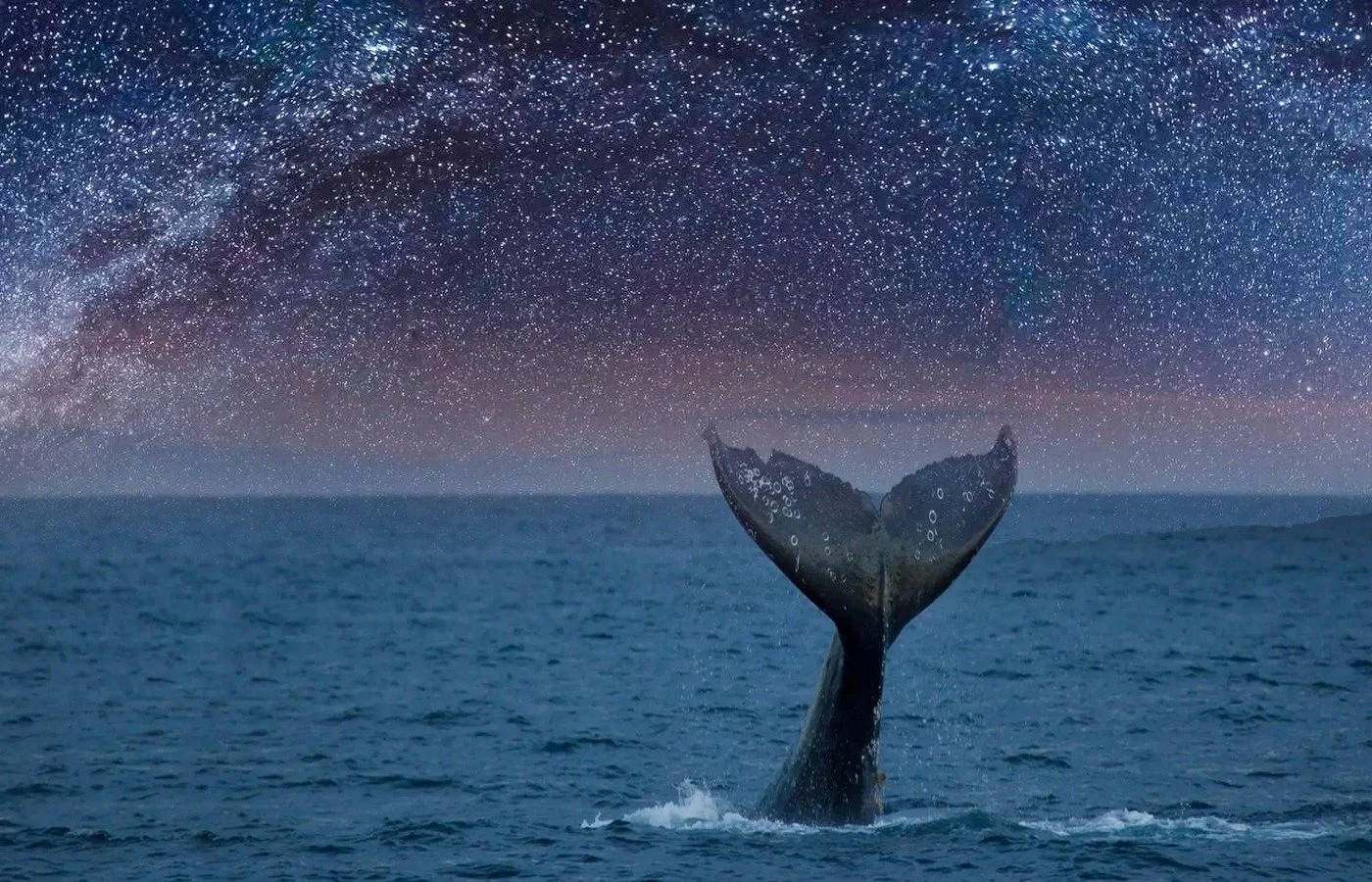
There are no city lights within a hundred miles. The Vizcaíno Desert is one of the darkest sky environments in all of North America, and our evenings on the lagoon shore are nothing short of cosmic. Campfires are lit at dusk. Mothers and children lie on their backs on the warm sand and watch the Milky Way arc overhead in a blazing river of light — the same stars the gray whales navigate by on their ancient migration routes.
These campfire conversations are the heartbeat of AtlasDaughters. What did we witness today? What did it change in us? What does it mean to protect something so magnificent that it can never be bought, only safeguarded? These are questions children answer first — and most truly.
PART 2 · DAYS 4–6
Island at the Edge of Everything
Isla Espíritu Santo
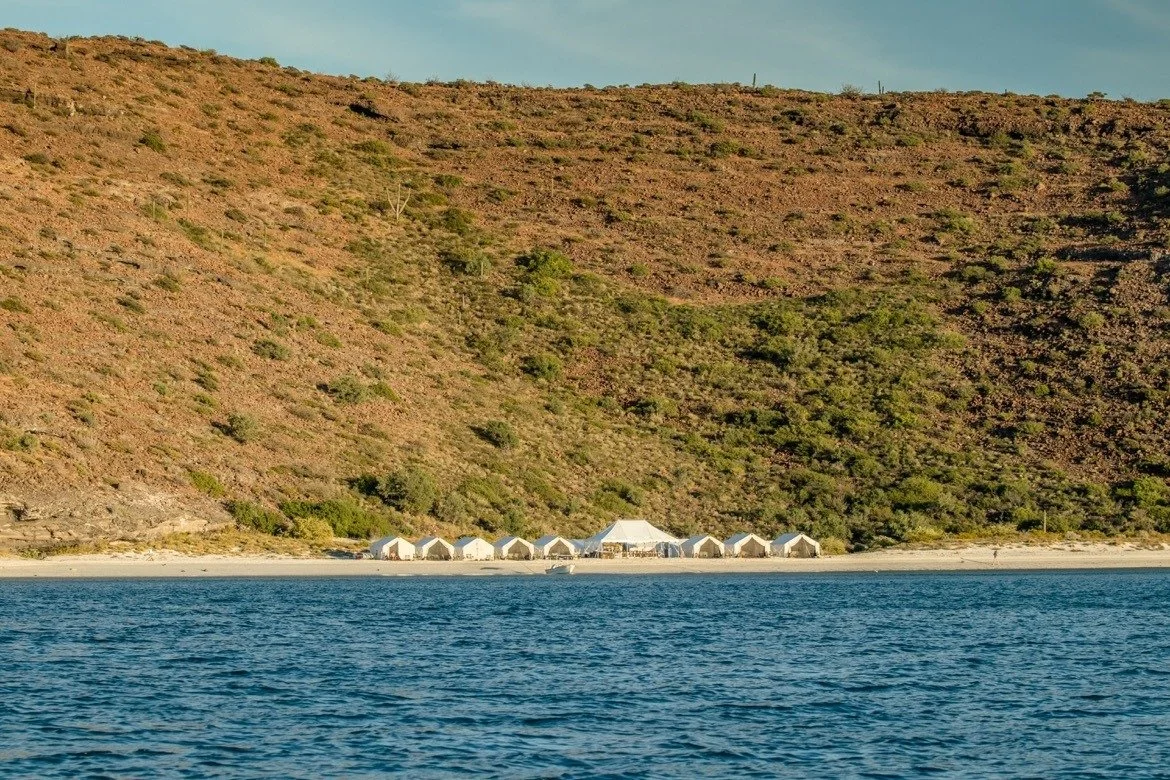
Camp Cecil · Isla Espíritu Santo · Sea of Cortez · Our beachside home for three nights
There is an island in the middle of the Sea of Cortez. It has no roads, no hotels, no permanent inhabitants. It belongs entirely to the wild — and for three nights, it will belong to us.
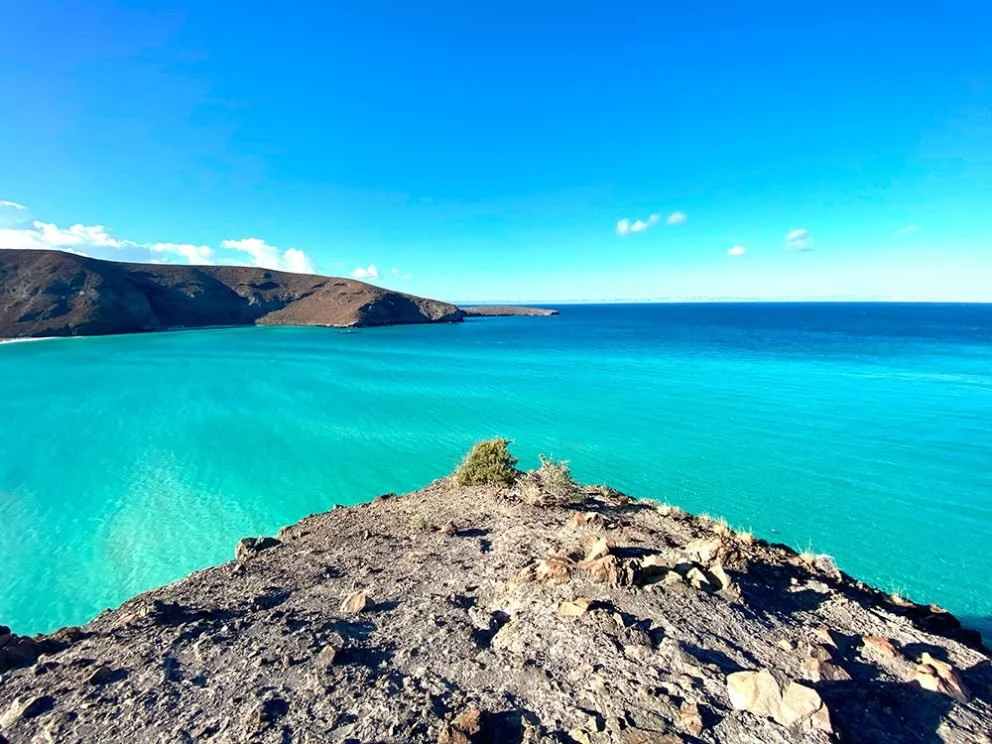
The impossible turquoise of Isla Espíritu Santo · Sea of Cortez · UNESCO World Heritage
February: The Sea of Cortez at Its Most Alive
Presidents' Week in February is not only the peak of gray whale season at the lagoon — it is also one of the most spectacular months for wildlife in the Sea of Cortez. The waters around Isla Espíritu Santo host a convergence of marine life that borders on the miraculous.
"At night, the only sound is the sea. At dawn, the only question is: which direction do we point the kayaks today?"
Whale Sharks
The largest fish on Earth gather in La Paz Bay in winter — snorkeling alongside them is unforgettable.
Sea Lions
A resident colony on the rocky outcrops — curious, playful, completely unafraid.
Sea Turtles
Green and loggerhead turtles drift through the warm shallows, visible from the kayak.
Manta Rays
Giant oceanic mantas cruise the surface, their wingspan wider than a child is tall.

Paddling the Aquarium of the World
La Paz and the waters of Isla Espíritu Santo are among the finest kayaking and stand-up paddleboarding destinations in all of North America. Each morning, we push off in sea kayaks across water so clear our children can see the sandy bottom ten feet below. We paddle into hidden lagoons, drift alongside sea turtles who surface to breathe just ahead of our bows, and watch manta rays cruise beneath us like shadows of the sea.
Swimming With the Gentle Giants
In February, whale sharks, the largest fish in the ocean, up to 40 feet long and utterly harmless — gather in the warm waters of La Paz Bay. Our cohort slips into the water alongside them: filter-feeders the size of school buses, drifting slowly through the surface. For a child, floating alongside a creature that massive — that gentle, that ancient — is to understand the ocean's power and vulnerability at the same time.
The Sea Lions of Los Islotes
Off the northern tip of Espíritu Santo, Los Islotes is home to a thriving, permanent community of over 400 California sea lions — one of the most beloved and animated colonies in the entire Sea of Cortez. These animals are legendarily social, endlessly curious, and completely unfazed by snorkelers in their midst. Children slide into the water and find themselves instantly surrounded: sea lions spiraling between their legs, darting beneath them, blowing bubbles in their masks, and peering at them with enormous, liquid eyes that seem to ask: what took you so long?
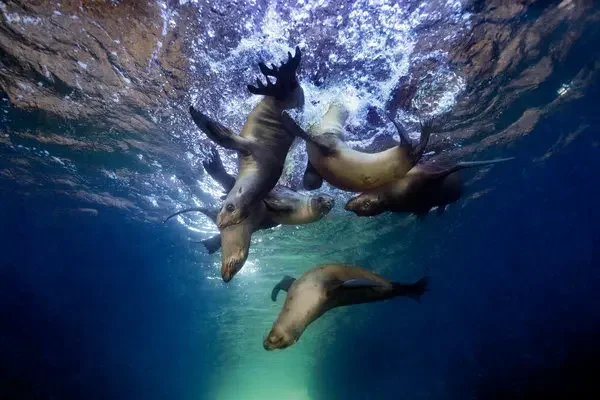
Los Islotes · Isla Espíritu Santo · Home to a permanent colony of over 400 California sea lions
It is, without exception, the most joyful 45 minutes of every child's life.
Into the Night: Stars Over the Sea of Cortez
At Camp Cecil, the nights are as alive as the days. There is no light pollution on Isla Espíritu Santo — no roads, no infrastructure of any kind. As darkness falls, the Milky Way appears in full, reflected in the still water below. Mothers and children sit at the edge of the sea, wrapped in blankets, watching the sky. Conversations move from the whale shark they swam with this morning to what kind of people we want to be in a world that still has places like this in it. These are the conversations that last a lifetime.
Moments your Children
Will Never Forget
Completing the Ocean Detective Challenge— arriving in Baja already knowing the gray whale's migration route by heart
Reaching out to touch a gray whale calffrom a panga on the most active birthing lagoon in the world
Waking before dawn to watch mothers and calvesmove through the still silver water of Laguna San Ignacio
Planting mangrove seedlings alongside the Mujeres de El Dátil— the women rebuilding the forest that protects the whales
Watching the Milky Way from the lagoon shorein one of the darkest-sky environments in North America
Kayaking hidden coves of Isla Espíritu Santo— an uninhabited UNESCO island in the Sea of Cortez
Snorkeling alongside whale sharks— the largest fish on Earth, gentle as the tide, impossible to forget
Swimming with the sea lions of Los Islotes— spiraling around them, blowing bubbles in their masks
Drifting alongside sea turtles and manta raysfrom the kayak in water clear as glass
Waking in a glamping tent on a deserted island beachwith the Sea of Cortez at their feet
Campfire conversations under the starsabout what we protect and why it matters
Understanding, truly understanding,why undeveloped places are the rarest and most precious places left
Protecting the Last
Undeveloped Lagoon
Laguna San Ignacio is the world's last undeveloped California gray whale birthing lagoon — once threatened by an industrial salt factory, saved by a coalition of local fishing cooperatives, scientists, conservationists, and women who refused to let it go. Our AtlasDaughters cohort will make a collective philanthropic investment in the Daughters for Earth Mangrove Restoration Project, led by WILDCOAST in partnership with Mujeres de El Dátil.
Why Mangroves. Why Here. Why Now.
Mangrove forests sequester up to five times more carbon per acre than tropical rainforests, and are the nurseries of the sea — the tangle of roots where juvenile fish shelter and the food web begins. Our travelers remain connected to this project long after we return home — receiving updates on planting progress, species monitoring, and the ongoing story of the lagoon. As with every AtlasDaughters journey, this is not a donation alone, it is a relationship that will unfold across the years with a desire commitment of $1 Million in capital from our cohort.
Our Nonprofit Partners
Daughters for Earth,
WILDCOAST & Camp Cecil
Daughters for Earth funds women-led environmental solutions across the globe, operating from the proven premise that women's leadership is the most effective, durable foundation for ecological systems that endure. Their investment in Laguna San Ignacio brings together the best science, the strongest local knowledge, and the irreplaceable power of women who have lived alongside this lagoon their entire lives.
WILDCOAST has worked for over two decades to protect coastal and marine ecosystems in the Californias, partnering with local fishing cooperatives and local communities. Their relationship with the Mujeres de El Dátil is one of the most successful examples of gender-equitable, community-led conservation in Latin America.
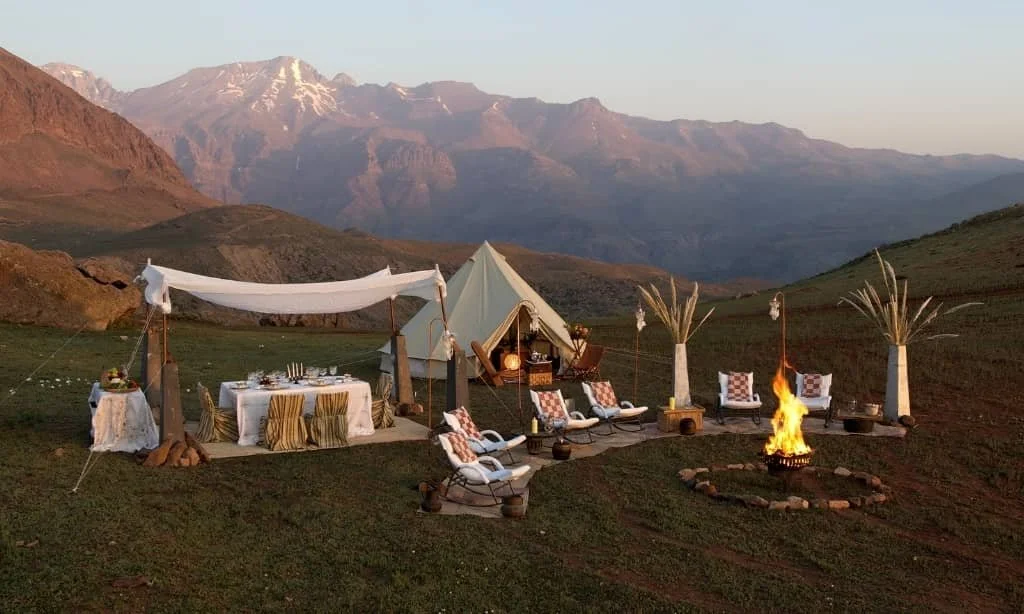
Camp Cecil / Todos Santos Eco Adventures operates a Leave No Trace island camp on Isla Espíritu Santo staffed by bilingual naturalist guides, certified Wilderness First Responders, and an on-site chef who feeds our cohort extraordinary local food three times a day. They are the reason our children sleep under the stars of the Sea of Cortez on an uninhabited UNESCO island and wake up ready to kayak.

Join us on this Unforgettable Journey
This is a pilgrimage into the world's last wild nursery — and a declaration, made by mothers and children together, that what is magnificent is worth protecting. Baja will change your child. It will change you. And together, you will change it back.